Don’t be afraid to move on
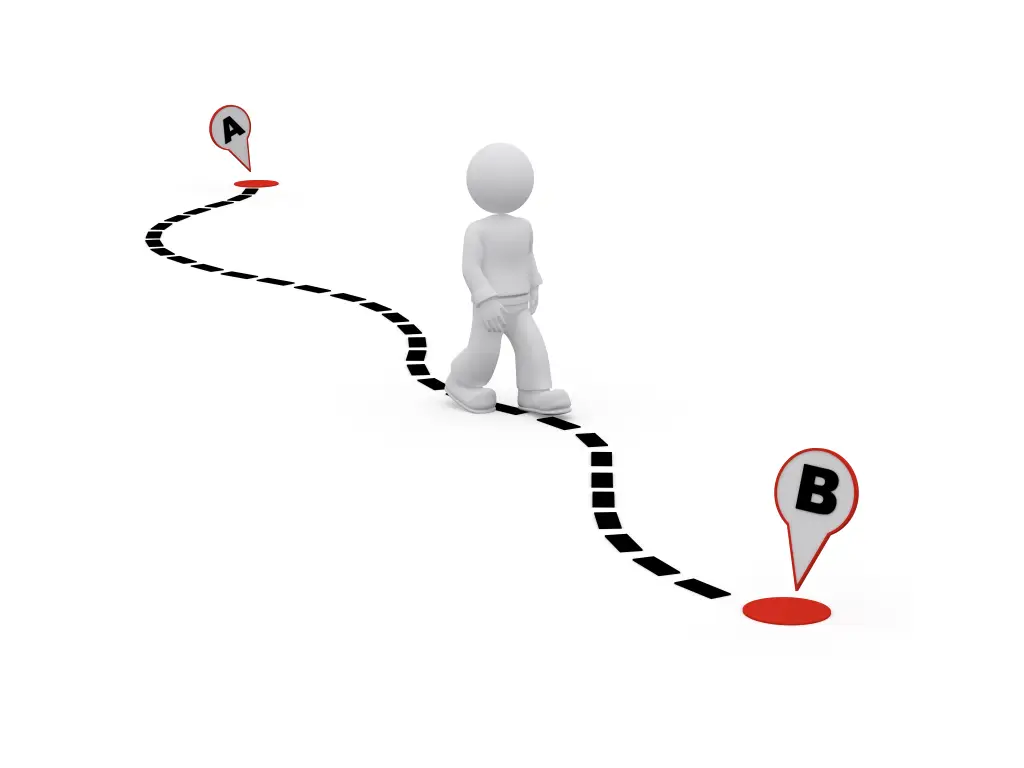
Nebát se posunout se dále. A talk about getting from point A to point B: why I went looking for a new job, what I wanted, what the market actually offered, and how hard it is to pick. I gave it at PHPlive in Ostrava and repeated it the next day, 28 February, in Žilina.
This was a personal story more than a technical talk. The slides are mostly pictures, and the story was told out loud. People usually connect job hunting with stress, so they don’t like doing it and don’t change jobs often. I wanted to show that it doesn’t have to be like that, and ideally break that picture in people’s heads.
Could you be happier?
I opened with a quick quiz. Who thinks they could be happier in life? Not only at work, in general: who feels there is still some room? A few hands went up, so apparently some people in the room were already as happy as it gets.
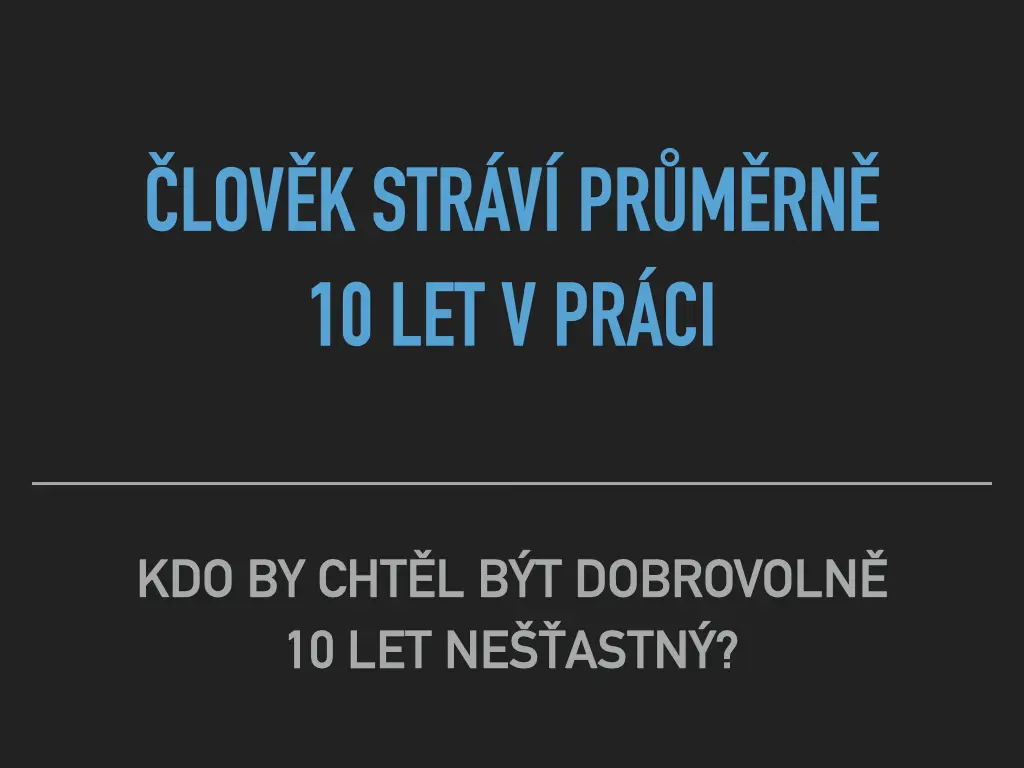
Why I asked: on average, a person spends ten years of pure time of their life at work. So, again, who would voluntarily be unhappy for ten years? I certainly wouldn’t. If you don’t want to be either, keep reading.
Why I was looking
To be fair, I should say why I was looking. It wasn’t because I was unhappy in my job. The slides answered with two pictures: an empty wallet before, someone buried in banknotes after. The most honest answer is that we had used up the investment for our startup and didn’t get another round. There wasn’t enough money in the company to pay me, so I had to find a job, and partly use it to keep funding the development of my own project.
I also didn’t have much practice. The last time I had looked for a job was five or six years earlier, and even then work had mostly found me, because I was around good people. I started looking at the end of December and wanted to start in February, so I had a month and a bit.
Set your criteria first
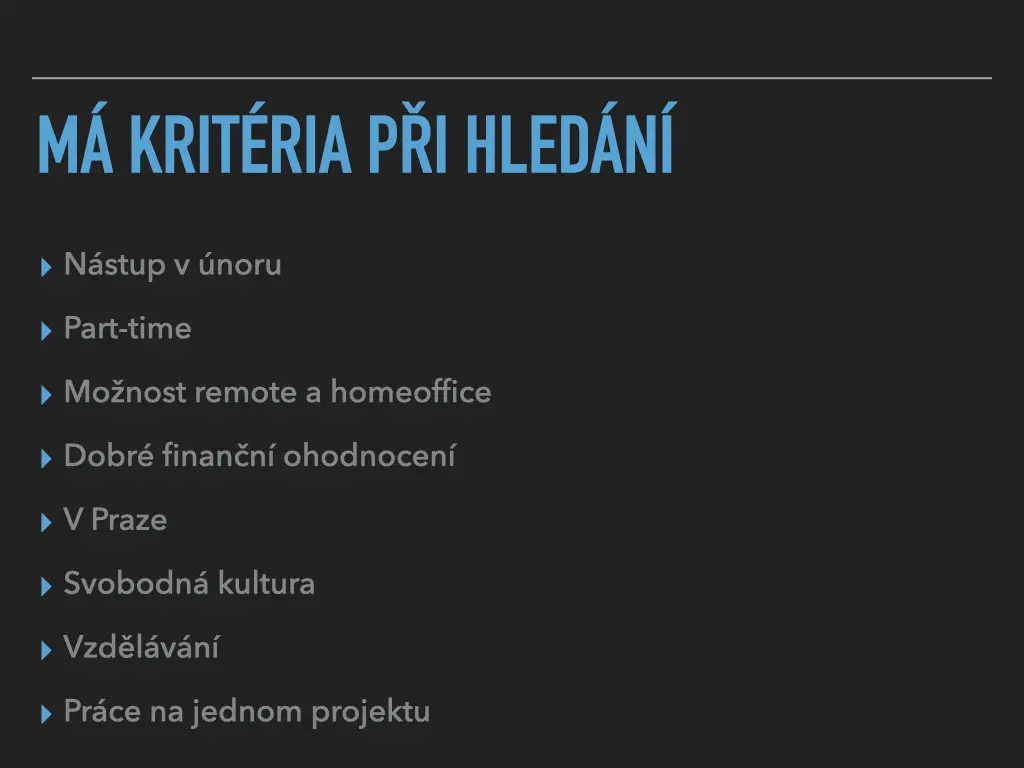
My first mistake was that I didn’t set any criteria at the start. I only realised it about halfway through all the interviews. If I were looking again, I would do it on day one: write down what you expect from the new job and use it as a checklist for each offer. This is the list I made, late:
- Starting in February
- Part-time
- Remote work and home office possible
- Good pay. Who wouldn’t want that?
- In Prague, because I was moving there for good two days after the talk
- A free, open culture. No corporation where my word carries no weight. If I think something would change the company for the better, I want to be able to walk up to the boss and say it. I had the opposite experience in an earlier job, and it was the reason I left.
- Learning and education. I like to learn, and I required room to keep learning.
- Working on one project only
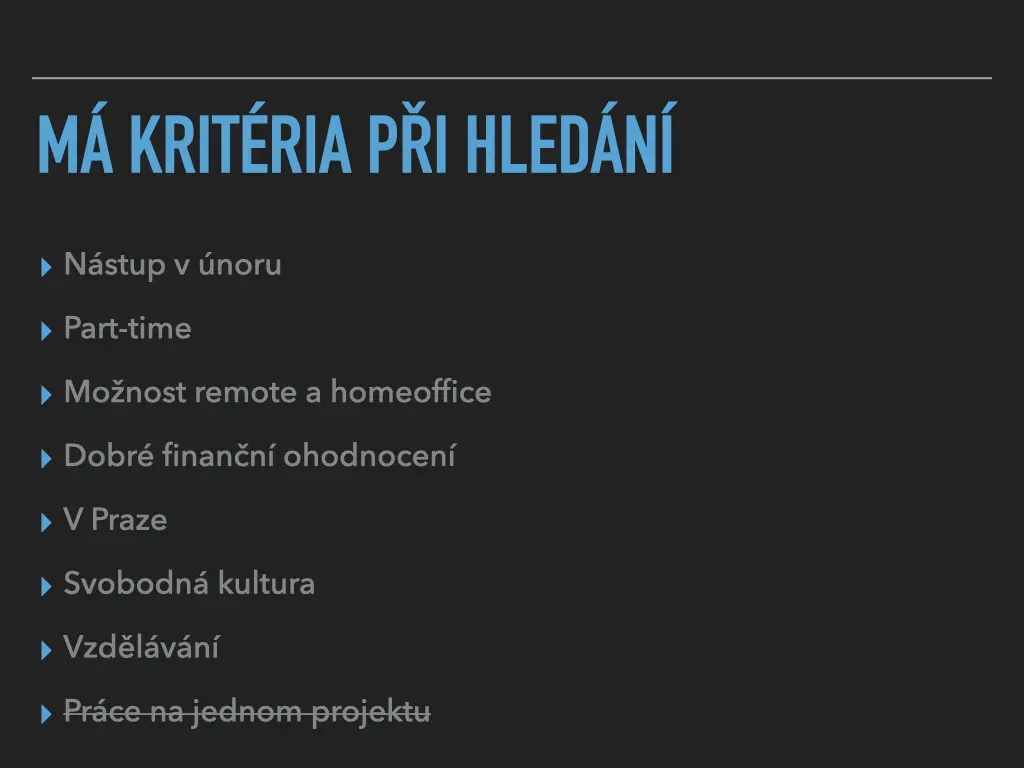
On the next slide the last one was crossed out. I didn’t find a job like that, so that box stayed unticked.
Expectations vs reality
A good friend of mine, Tomáš Votruba, has a saying: have no expectations. It’s hard. Even though I tried, it’s difficult to look for a job and expect nothing from it, so I walked in full of expectations anyway, and ran into a paradox (5:19 in the video).
I interviewed at 17 different companies (counting companies, not second and third rounds). The more I wanted to work for a company, the less money it offered me. And the other way round.
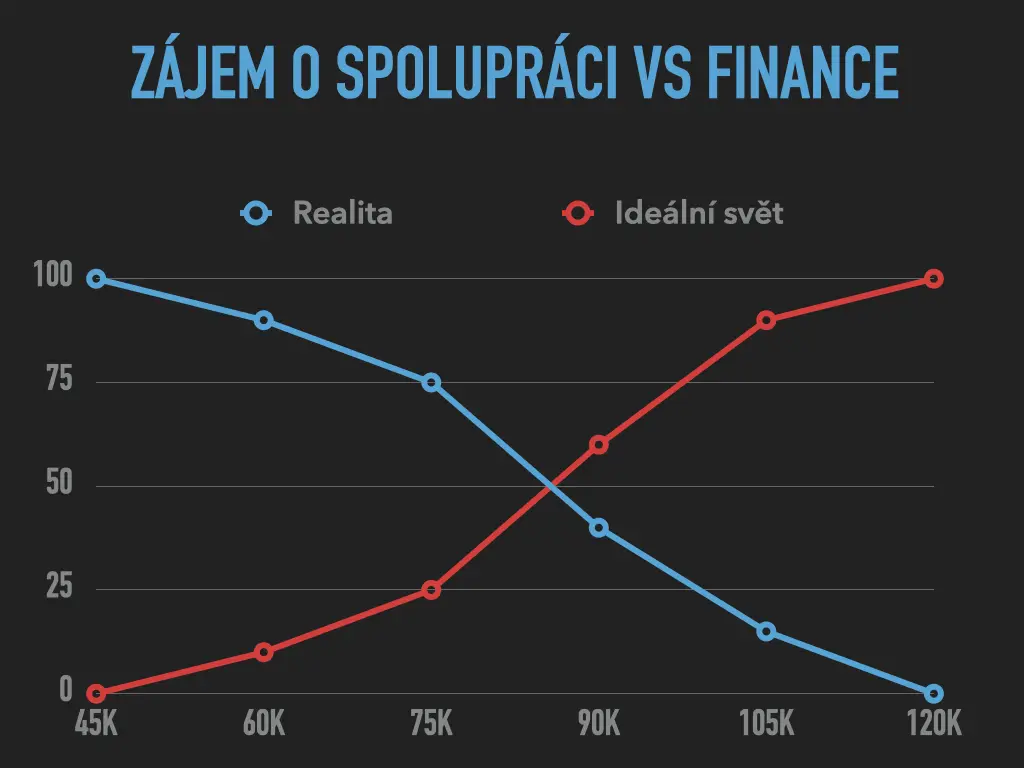
The numbers in the chart are only illustrative; I needed something to put on the axes. But the shape is real. The company that interested me least offered the most money. I won’t name it. Besides PHP I would have had to write C# there, on a legacy .NET application from long before version 2, with a lot of legacy code and few tests. A bad codebase I didn’t want to step into. It’s a nice example that the company offering the most money isn’t necessarily the best one.
The red line is the ideal world: the company that pays the most is also the one you look forward to the most. We don’t live there. We live on the blue line, so in the end I had to balance between the two.
Huge demand
As programmers we live in a completely different world from most people. There is enormous demand for developers, and good developers especially. My parents, or anyone I know outside IT, complain when they look for work that it’s hard to find anything. We don’t have that problem.
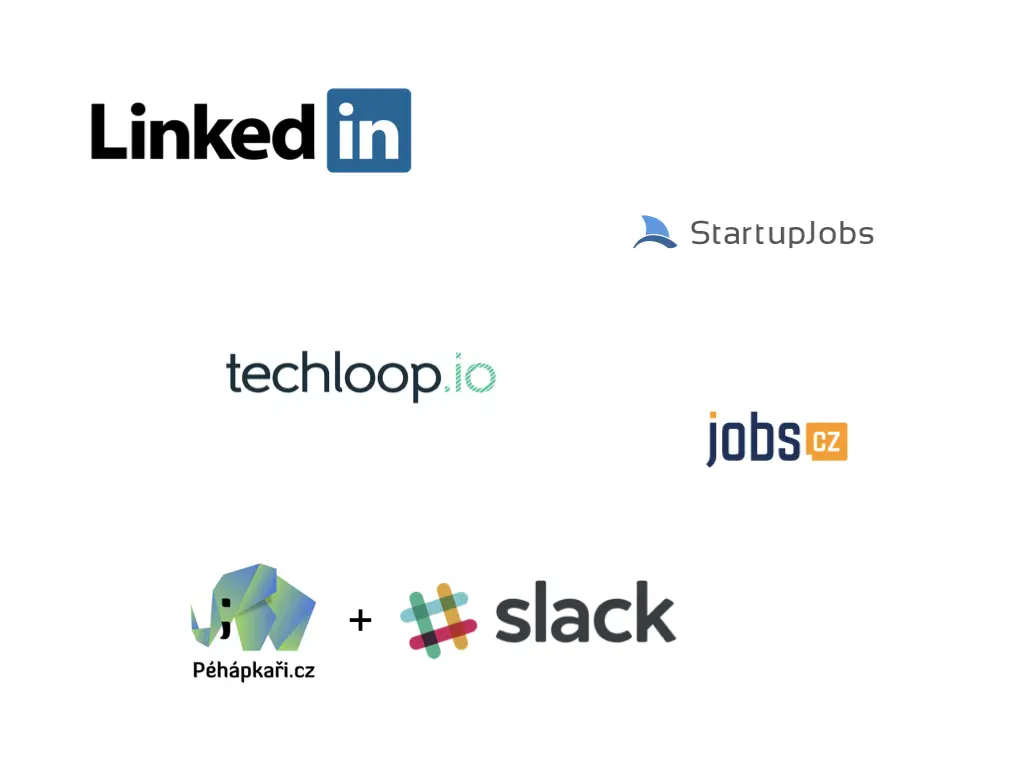
The channels on the slide are the ones I actually used: LinkedIn, StartupJobs, techloop.io, Jobs.cz, and the Péhápkaři community with its Slack. They are only the tip of the iceberg; there are many more. Job offers everywhere you look. Then the slide of a planet blowing up: it feels like we live on a different planet from the rest of the population, and it would be a shame not to use that advantage, each of us for ourselves.
Which one do I pick?
With 17 companies to choose from, choosing became the hard part. The slide was a line of beauty-pageant contestants: they all look great, which one is the right one? Except the C# one, they all looked good to me.
First I told myself I can’t make a bad decision when they are all great. But over time I slid into something close to depression: what if I pick the wrong one? I can’t change it then, I’ll start the job, and who gives me back the time I spent there? I was giving a talk about not being afraid to move on, and I fell straight into that trap myself.
My girlfriend got me out of it. She said: so what, you try it, and if it doesn’t work you go somewhere else. There are so many offers. That brought me back down to earth.
Is it the right one? I ended up at Apploud Digital, starting in February. And at this point I don’t mind whether it’s the right one. If it doesn’t fit or doesn’t go well, it’s no problem to try something else. Move on, like the title says.
Don’t be afraid of it
That is what I wanted to get across (12:46 in the video). If you are not happy in your job right now, don’t be afraid to try something new. It doesn’t have to be as drastic as going straight for a new job; it goes for anything. People are afraid to step out of their comfort zone for all kinds of reasons: kids, the fear of losing a steady income for a while. The fears differ.
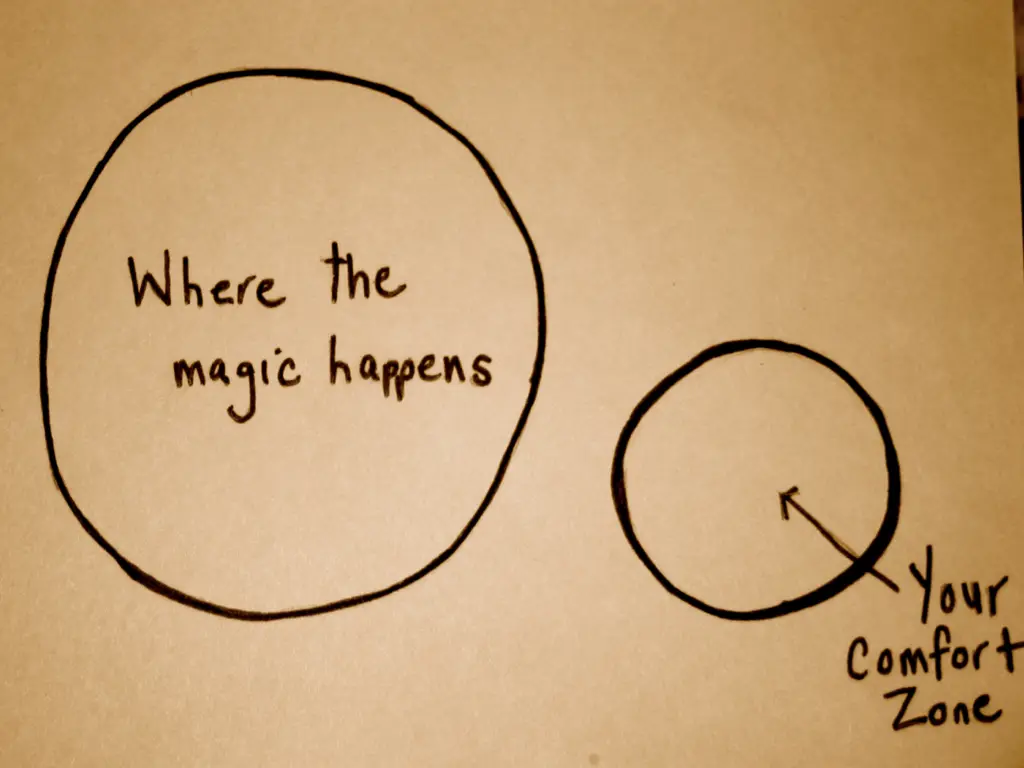
The closing slide was the familiar drawing of two circles: a small one labelled “your comfort zone”, and a big one outside it labelled “where the magic happens”. It’s no revolutionary news. But once you are willing to step out, get over the fears and start trying new things, something magical starts to happen. Your life can change, for better or for worse. If you let the fear stop you from even trying, you will never know what lies beyond the circle.
My example was my girlfriend again. For three or four years she had no steady job; she studied for a while and baked cakes. It took me about two years to persuade her to move to Prague with me. The first night in the new flat she cried most of the night that she didn’t want to be in Prague. When I gave the talk she was in her second week at a new job, and she was a different person: happier, she even smiled at me now and then. The first steps will be hard. But if you don’t try, you won’t find out whether you would be happier.
Questions
The Q&A took almost as long as the talk. The answers that stuck:
- Working abroad? I had worked abroad before: four months on site in Bangkok. I thought about it again this time and it was tempting. The biggest obstacle was two cats at home. We discussed what to do with them for half a year, and my girlfriend loves them so much that she told me to go abroad alone; she would stay with the cats.
- What to expect when you look for a job alongside school, with some PHP experience? Ideally no expectations, but I can’t do that either. Expectations are very subjective. I worked during high school too. If I could take one thing back, it would be the time I spent playing computer games in those years instead of learning and programming.
- Freelancer or employee? From the start I was drawn to my own projects and to being my own boss, and I struggled to find that freedom in companies. I have my own startup; it ran out of money, which is the main reason I’m an employee now. Companies with a free culture that listen to you do exist. Nothing comes for free, but if you give the job your best, you can certainly find a company that gives it back.
- How long have you done PHP? I first met it at ten. I’m 25 now, so the fifteen-year anniversary is close, though the first two or three years weren’t much programming.
The last question was what I play now. A phone game where a match takes about three minutes, which I fill tram rides with. Right after telling a room to stop gaming and work on themselves.